

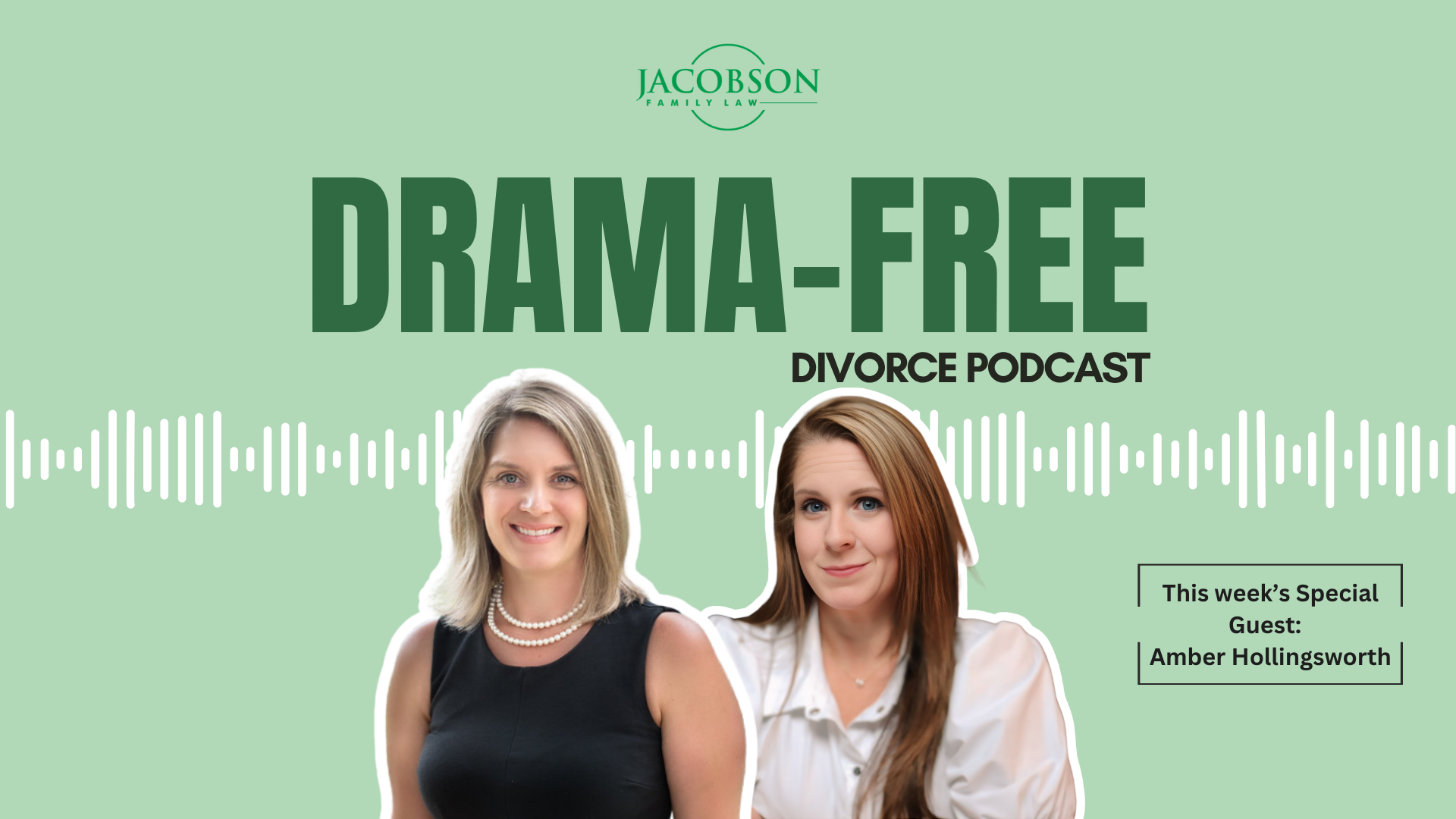
When a spouse is struggling with addiction, families are often left holding some of the hardest questions there are. Is this a marriage problem or an addiction problem? How do I help without making things worse? And how do I protect my children through all of it? The overlap between divorce and addiction is painful, confusing, and rarely talked about openly — which is exactly why we devoted an entire episode of the Drama-Free Divorce Podcast to it.
In this episode, host Cary Jacobson sits down with Amber Hollingsworth, an Addiction Recovery Specialist who has spent more than 20 years working with people struggling with addiction and the families who love them. Amber has built a YouTube community of over 800,000 people around a hopeful and often surprising message: addiction isn’t a hopeless condition you’re powerless over. It’s a deeply ingrained pattern built on beliefs that can change. Below are some of the biggest takeaways from the conversation.
Is It a Marriage Problem or an Addiction Problem?
One of the hardest parts of navigating divorce and addiction is untangling the two. When addiction is present, it clouds judgment, fuels chronic conflict, and makes it genuinely difficult to know whether a marriage is struggling on its own or buckling under the weight of the addiction.
Amber’s guidance is to look at the pattern rather than any single incident. Addiction tends to create a repeating cycle — broken promises, escalating conflict, and a slow erosion of trust — that looks different from the ordinary ups and downs of a relationship. Getting clear on which problem you’re actually facing is the first step toward deciding what comes next.
Loving Someone Doesn’t Mean You Have to Stay
Many spouses feel that because they still love their partner, they’re obligated to stay no matter what. Amber gently challenges that belief. Love, on its own, isn’t always enough to sustain a healthy relationship — and choosing to protect yourself, set a boundary, or even leave doesn’t mean you’ve stopped caring or given up on someone.
This is often the hardest permission for people to give themselves. But recognizing that your own wellbeing matters too is not selfish; it’s frequently the healthiest thing you can do for everyone involved, including your children.
When Helping Becomes Enabling
Almost every family touched by addiction wrestles with the line between support and enabling. Most people are trying so hard to help that they don’t realize when they’ve crossed into making the behavior easier to continue.
That line gets even blurrier during separation, divorce, and co-parenting, when the instinct to step in and rescue collides with the need to hold firm boundaries. Learning to tell the difference — supporting the person while stopping the enabling of the addiction — is one of the most important shifts a family can make.
The Hidden Impact of Addiction on Co-Parenting
Co-parenting is challenging under the best of circumstances. Add addiction, and the stakes rise sharply, because a child’s safety and stability are on the line. Amber and Cary talk through how to protect children while still allowing for a relationship with the other parent, how to set appropriate boundaries, and how to think about rebuilding trust over time when a co-parent is working toward recovery.
From the legal side, this is where a thoughtful, detailed parenting plan matters enormously — one that builds in structure and safeguards rather than leaving things to chance. Our Co-Parenting Scripts and Parenting Plan Template can help you put language and structure around those first hard conversations. Many families in high-conflict situations also find a documented communication tool like OurFamilyWizard invaluable for keeping exchanges clear, calm, and on the record.
Why Families Stay Stuck for Years
Perhaps the most resonant part of the conversation is why people remain in an unhealthy situation far longer than they ever expected. Denial, hope, fear, guilt, and uncertainty all conspire to keep families frozen — hoping things will change while fearing what happens if they don’t.
Amber’s message here is ultimately one of hope: clarity is possible, patterns can change, and families can move from feeling stuck to making clear, confident decisions about their future. As she often hears from her audience, “I wish I had known this years ago.” Our hope is that you’re hearing it right on time.
Finding a Calmer Path Forward
If divorce is the right path for your family, it doesn’t have to be a war. At Jacobson Family Law, we help families resolve things with as little conflict as possible — including through divorce mediation, which keeps decisions in your hands rather than a judge’s. You’ll also find free tools and guidance in our divorce resources and answers to common questions on our FAQ page.
When you’re ready to talk through your specific situation, we’re here to help. Schedule a consultation with Jacobson Family Law, or call us at 443-741-1147. We serve families throughout Maryland, including Howard County, Baltimore, Columbia, Ellicott City, and the surrounding communities.
Listen to the Full Episode
Listen to the full conversation with Amber Hollingsworth on the Drama-Free Divorce Podcast — available on Apple Podcasts, Spotify, or wherever you listen.