

When most people think of divorce, they picture stacks of legal documents, asset spreadsheets, and courtroom hearings. However, at Jacobson Family Law, we know that divorce is 10% legal and 90% emotional. To move through the process successfully, you have to address the mental health and divorce connection.
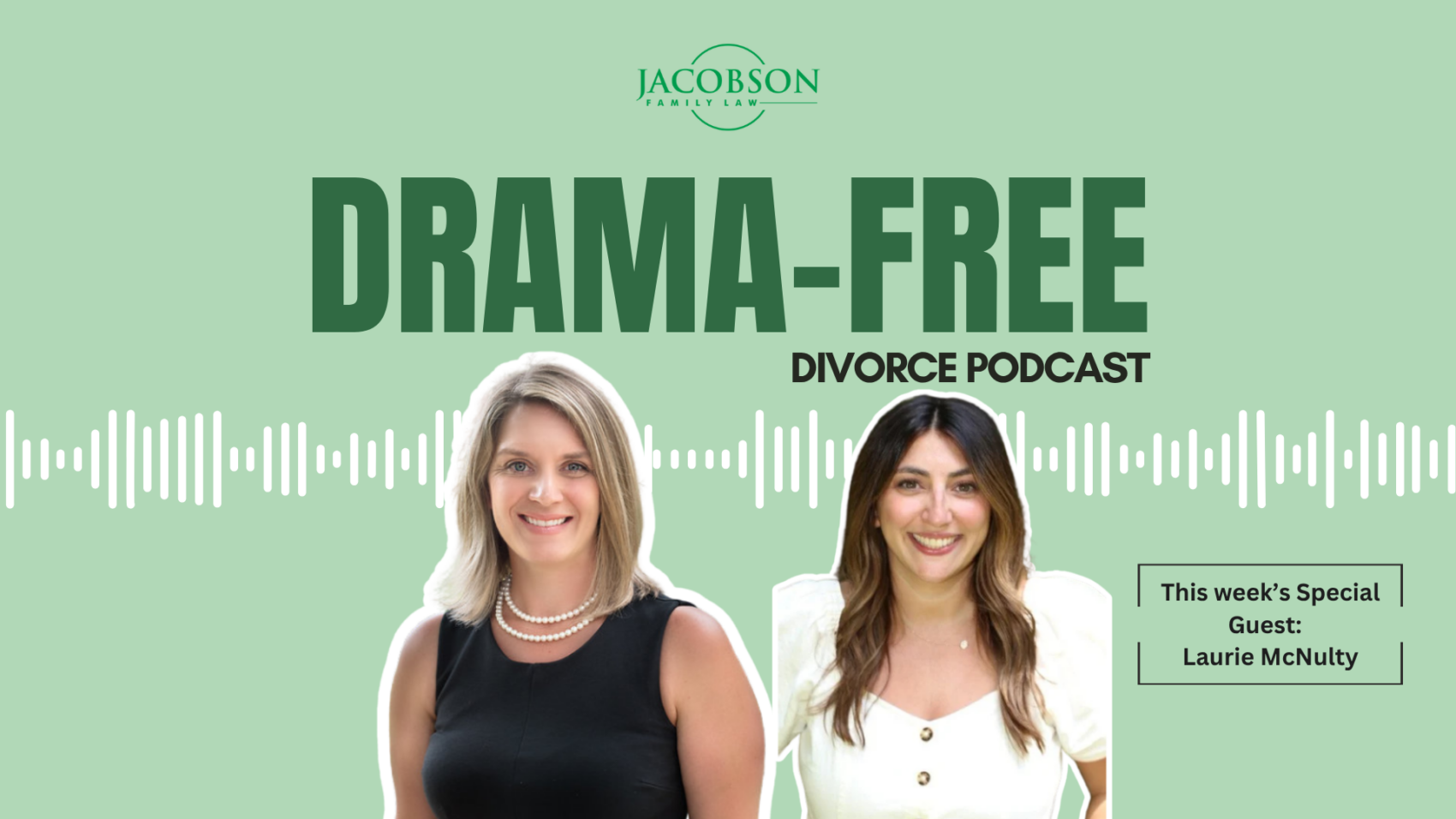
In the latest episode of the Drama-Free Divorce Podcast, host Cary Jacobson sits down with Laurie Chaikind McNulty, an individual, child, and family therapist and the founder of Elm Therapy and Wellness. Together, they explore the deeply personal side of separation—from the paralyzing uncertainty of the initial decision to the long-term emotional health of the entire family unit.
The Emotional Weight of the Decision to Separate
One of the most frequent hurdles in any family law practice is the “decision-making phase.” Many individuals find themselves stuck in a cycle of anxiety and shame, wondering if separation is the right path.
Laurie explains that during this time, many people become “emotionally flooded.” When the brain is in a state of high stress, it’s nearly impossible to make life-altering decisions with clarity. Therapy during this phase isn’t necessarily about saving a marriage or ending it; it’s about lowering the emotional “noise” so you can make a choice that aligns with your long-term well-being.
How Therapy Supports Couples in Transition
Even if a couple has decided to move forward with a divorce, mental health support remains vital. Laurie discusses how specialized approaches, like Imago therapy, can help couples communicate with respect and clarity.
By using therapy as a tool during the divorce process, couples can:
-
Reduce high-conflict interactions.
-
Establish healthy boundaries for future co-parenting.
-
Process the grief of the relationship in a safe, neutral space.
Supporting Children: The “Silent Carriers” of Stress
Children are incredibly perceptive, often absorbing the stress and tension within the home long before a formal separation occurs. Laurie emphasizes that parents don’t need to be “perfect” to protect their children; they need to be regulated.
Consistency, attachment, and open (but age-appropriate) communication are the pillars of supporting children through divorce. Laurie’s practice, Elm Therapy and Wellness, works extensively with families to ensure that children remain a priority, not a casualty, of the legal process.
The Mental Health of Family Law Professionals
In a unique turn, this episode also touches on a topic rarely discussed: the mental health of the attorneys, mediators, and staff working in family law. This field is high-pressure and often involves secondary trauma.
Laurie and Cary discuss the reality of professional burnout and why it is essential for legal teams to have sustainable wellness systems in place. When your legal team is emotionally supported, they are better equipped to provide the compassionate, high-level guidance you deserve.
Conclusion: A Healthier Path Forward
Divorce is undoubtedly a difficult chapter, but it doesn’t have to be a destructive one. By prioritizing mental health and seeking the right therapeutic support, you can navigate this transition with dignity and peace of mind.
Listen to EP #9: Mental Health and Divorce with Laurie McNulty here!